
October readlog
Ja/en/zh/de sci observations, fringe and mainstream science, zh-cn paratactic sentences

Note. My writing is compressed from irl observations! Some of you complained it is too dense. So, I mass-deleted some long words. It could be fun to experiment with different tones.
ja/en/zh/de science styles potpourri
We visited science agora (X thread).
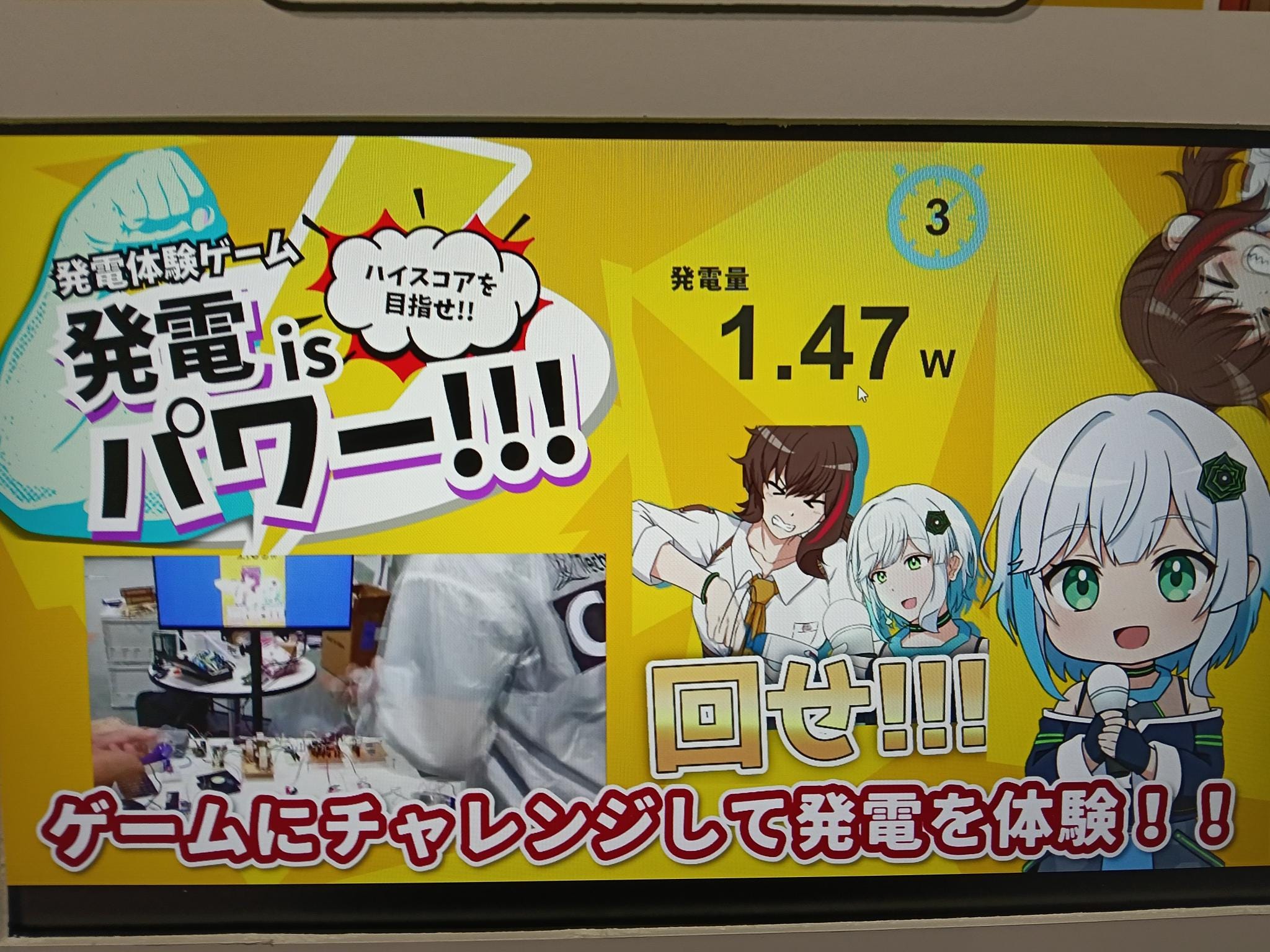
“Takeda cleanroom, cleanest air within the Yamanote line” doesn’t this description read like a meme? Ja papers about Insect radio. pH strips but with photos and machine learning. Open source, local fluorescent microscope. Flexible ECoG array to avoid squishing your brain, etc. Japanese science builds on top of a basis with fine-grained novelty which seems to be established by American rough prototypes that have high impact directionally.
So on Fri, Xu Zheying was talking about Qwen models having the best stock investing abilities 🥳 and lots and lots of new exciting audio and images from Wan 2.5 flashed on the screen. There’s no logical connection in his talk. I thought, Chinese tech seems to love thinking shortcuts as long as there is market validation, is uneven depth, and then jumps to scale.
Since both countries are researching neurotech, it will be interesting to see how the structures and methodologies differ; The Japanese government funds “Moonshot Internet of Brains” (timeline 2050) and there’s International Center for Primate Brain Research in China that is focused on mapping.
German neurotech programs would be fun to compare too: Last month I noticed German science is often presented with less narratives but as is with a progression from first principles—Thinking about the “On Quantum Mechanics” paper by Max Born in 1924.
Curious to how people react when an experiment yields null results and how to deal with their latent learning progress? In startups, someone may be “not qualified” to join a team because they need “a lot of training”. What is too much training in science. This reminds me, supervision often is related to happiness.
a tangent about quantum computing and fusion
Quantum computing is often motivated as a natural progression from physics. See, problem-centric motivation for QC sounds unnatural: Need better drugs. Need more secure cryptography—argument not exclusive.
Compared to fusion, which is often more problem-centric.
Common fusion reasoning: We’re building AI. Need more data centres. (Alternatively: trying to ascend the Kardashev scale). More energy demands. So, invest in fusion.
I wonder if due to this nature of motivation, there are more Chinese people working on fusion compared to QC, and the other way around in Germany.
tech ecosystem
Crypto is having its time in Japan! There are not a lot of public centralized tech events. There was the liquid AI hackathon, fully connected by W&B, robotics workshop, etc. I could find one or two good irl ones per week in Tokyo, though, need to learn more ja to understand the lectures—See Humanism in AI lecture, Sakana AI defense study events.
fringe vs mainstream science
This paper talks about community and document-level signals. It says
Community-level. Strong papers are highly connected to the ecosystem. So, a heuristic would be to build co-occurrence graph from a paper’s references, then, calculate connectivity and clustering coeffs. While playing around with this, one blocker was how existing citation layers like Semantic scholar or Open Alex restrict how fresh an input paper could be, and then, only shows related papers by their own similarity metrics rather than citations.
Document level. Sometimes, a paper, or even an article, may be full of jargon! Do the authors compress knowledgably or obfuscate? Given the German style of science, exposition clarity is not central to research quality! We may be able to check if authors know their stuff by if the text matches the ground truth in the ecosystem. Well hold up, if a field has no goals there is no ground truth … cope measurement should stay separate from narratives.
Also, detect red flags like tortured phrases, question marks. Don’t forget about green flags.
zh-cn parasitic paratactic sentences
Claude asks if I’m translating from Chinese as my prompts are too paratactic, just simple phrases piling up without conjunctions. I haven’t thought about it, so I went on a rabbit hole. First I wrote every kindness a category error 1/2 in parataxis and in hypotaxis. e.g. “Garden roof, a fresnel plate.”1
Then I had a 30 min break where I binge read 阿Q正传. More zh-cn bookstores than en here anyway. The story set in the 1911 Xinhai revolution—ended the Qing dynasty—describes bay area psychological horror and most people having anxiety problems.
阿Q is a labour drifting between jobs, housing; He loves gambling and opium. Read: software engineers drifting between jobs, tryna find a group house in SF who also happen to pump memecoins and psychedelics.
阿Q’s neither fully a villager or a townie, yet he hates both ‘条凳’, ‘葱丝大头鱼’ used by townies or ‘长凳’ and ‘葱叶大头鱼’ as endorsed by villagers. Read: “Not really a rationalist. Not entirely a biologist.”
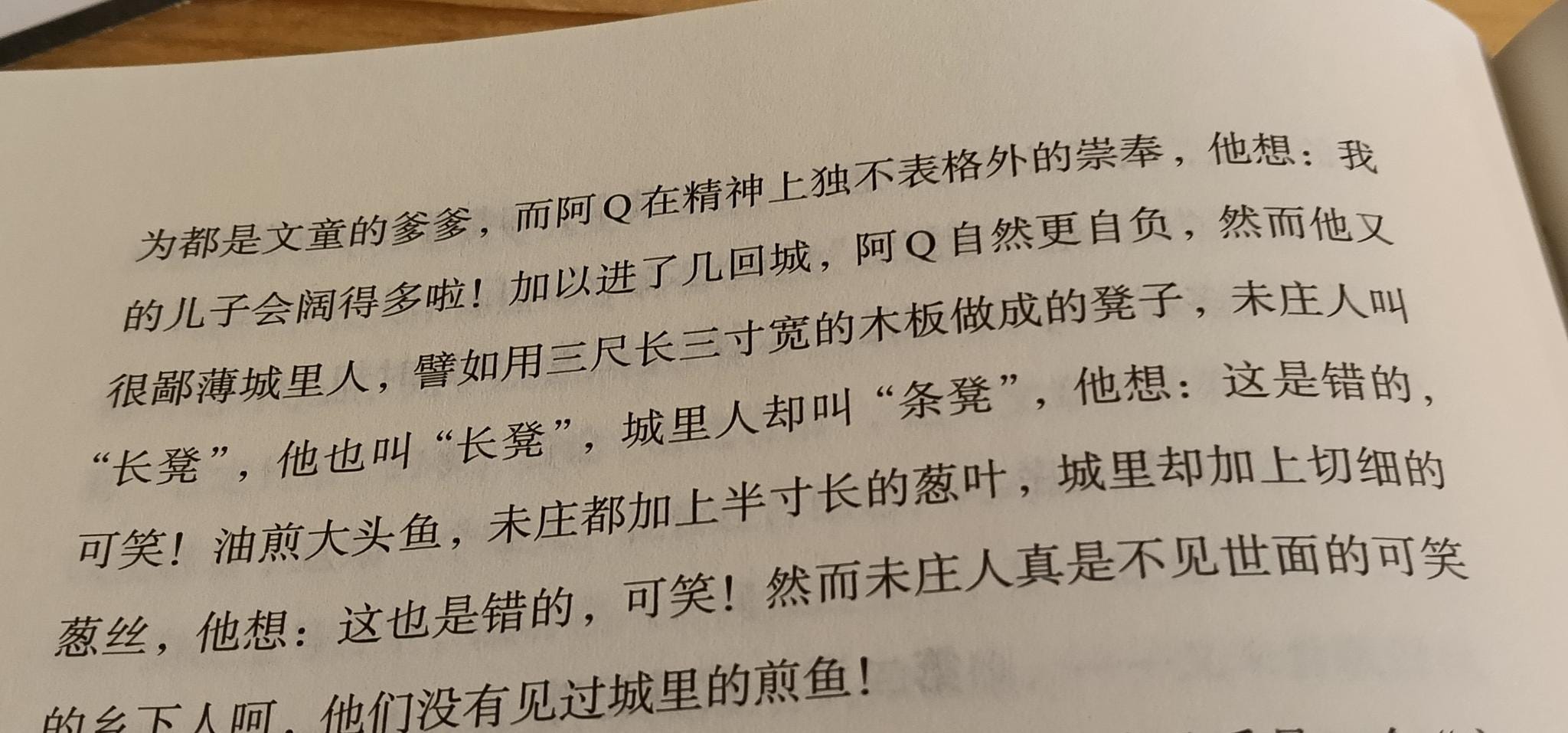
Similarities: Four or five distinct microtribes, the constantly high cortisol levels are similar. Differences: Present day, present time… And feedback loops are faster.
阿Q is determined to draw the best circle in his life, fails, ragequits and now believes only losers draw good circles. His 精神胜利法 maps to a reactively agency moment.
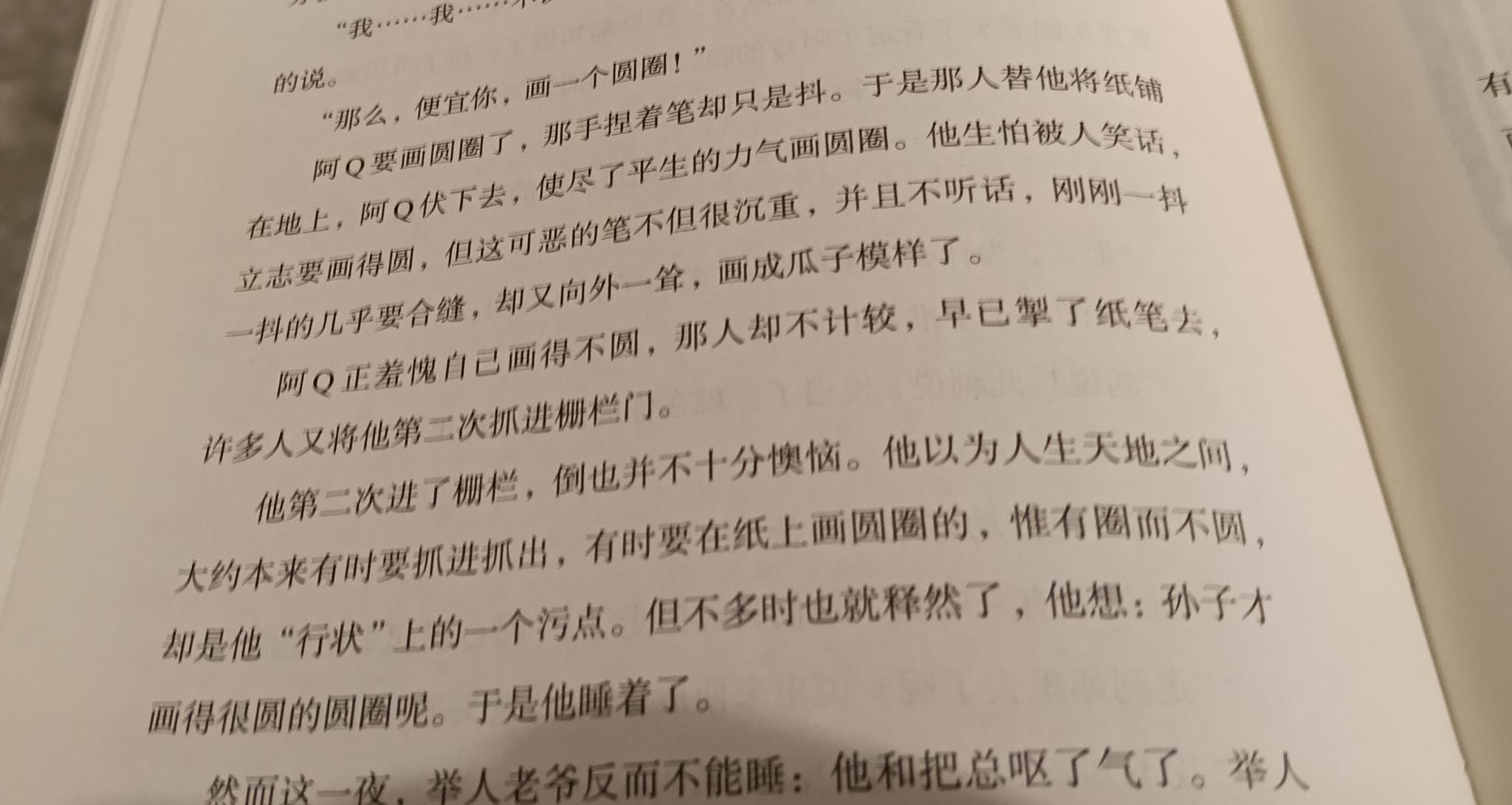
赵庄赵太爷~= an evil group house that welcomes people to crash with spare bean bags.
假洋鬼子: Soham, or, whoever is struggling with performance while overemployed, updating their resume headlines to match the specific job.
Chinese poetry.
Just look at these epic paratactic sentences:
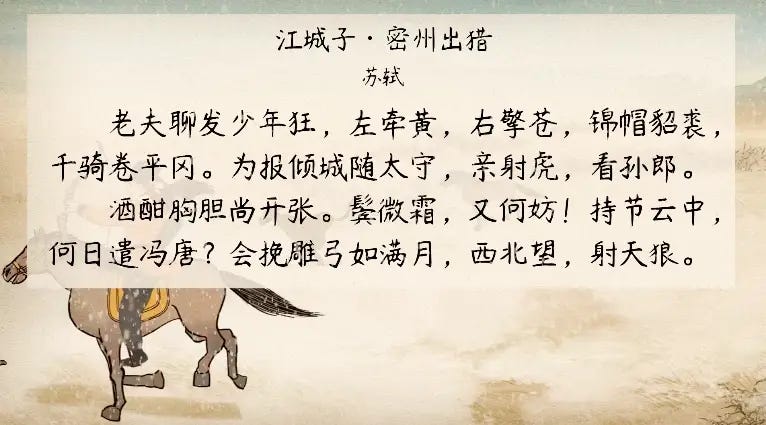
[subject + verb phrase A] , [s+vp b] … [topic A], [topic B], no pronouns (how convenient) and no explicit links.
Su Shi asserts even at 45, his exile hasn’t debilitated him. 2nd favourite is 丑奴儿·书博山道中壁 Young people write melancholic sentences from void of experience, older people just haha, yeah, what a cool autumn.
Why do I talk about cultural observations so much. (1) modeling people of different cultures is an interesting thought exercise (2) mythology natively models the world micro/meso/macro without borrowing from STEM fields, which have massive blindspots and strikes non-STEM folks as inflexible. To be clear, I’m not excluding STEM models, but pick the right tool for the task. (3) belief systems that can stand time and cultural tests.
So, school: readjusting is okay now! It definitely seems like a future self made the decision and I’m coming to terms with it.
Exercise in writing fake Chinese fiction with cosmically powerful imagery. “The snowflakes fall. The moon in the sky stares at the flakes on the ground, with a face full of ridicule. I’m still brighter than you anyway. Spatially, temporally, informationally and hypothetically, the moon and the snow couldn’t be further apart, interacting as blobs.”